
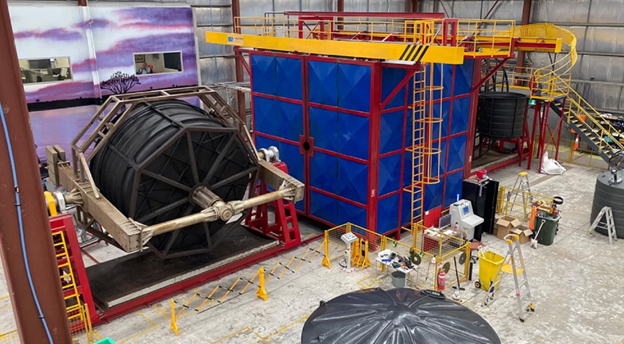
Most people walk past rotational moulding every single day without realising it. The kayak sitting in someone’s garage. The water tank bolted to the side of a rural property. The brightly coloured playground equipment at the local park. All of it likely came from the same fundamental process. This moulding has quietly shaped the physical world around us, yet it rarely gets the recognition it deserves outside of manufacturing circles. That gap between its impact and its public profile is genuinely worth closing.
Where Other Methods Fail
Injection moulding dominates most conversations about plastic manufacturing. But it carries a serious limitation that doesn’t get discussed enough — it struggles badly with large, hollow, complex shapes. Trying to produce a large water tank or a double-walled cooler body through injection moulding creates enormous structural headaches. Often it simply isn’t commercially viable. This is precisely where rotational moulding steps in. It solves problems that other processes cannot handle cleanly. In many ways, it was built specifically for the jobs that everyone else finds too difficult.
The Slow Process That Wins
There is an interesting irony worth sitting with here. Moulding is considerably slower than injection moulding on a per-cycle basis. Yet manufacturers keep choosing it. Speed per cycle means very little when a product needs consistent wall integrity across every centimetre of a large, irregular shape. Rushing that process creates thin spots. It creates structural inconsistencies that only reveal themselves under sustained pressure. The slower rotation cycle is not a flaw in the process. It is the entire reason the finished product holds up in real-world conditions across years of continuous use.
Tooling That Makes Sense
The moulds used in rotational moulding are typically machined from aluminium, which makes them far more accessible than the hardened steel tooling that injection moulding demands. For a manufacturer developing something new — or working with a client who needs a low-volume specialised piece — this changes everything about the commercial equation. Product development becomes iterative rather than intimidating. Adjustments stay affordable. Bringing something genuinely tailored to market no longer requires staking enormous resources on a single tooling decision made months before anything gets produced.
Structural Honesty
Think about where products actually fail in the field. Tanks crack at joins. Containers leak at seams. Structural failure almost always traces back to a connection point — somewhere two pieces of material meet and eventually surrender under repeated stress. Rotational moulding produces a single continuous structure with no joins anywhere. That eliminates the most common failure points before the product even leaves the factory floor. For anything handling chemicals, fuel, or drinking water, that is not a minor detail. It is absolutely fundamental to whether the product performs or doesn’t.
Colour That Doesn’t Lie
Surface-applied paint systems have an expiry date. Manufacturers rarely advertise that fact, but UV exposure, physical abrasion, and temperature cycling all work against coatings steadily and without pause. Pigment integrated through the full thickness of a rotationally moulded product behaves completely differently. The colour cannot peel or flake because it isn’t sitting on top of anything. It is the material itself. For outdoor products facing the genuinely harsh Australian climate, that distinction matters enormously across a product’s actual working life rather than just its showroom life.
Sustainability Without the Spin
The sustainability conversation in manufacturing has become exhausting. Much of it is just polished marketing language dressed up as environmental responsibility. The material efficiency of moulding is different. It is a straightforward mechanical reality. Plastic that doesn’t adhere to the mould gets reclaimed and reused. There are no sprues, no runners, no excess flash requiring heavy trimming. Waste reduction here isn’t a corporate target sitting in an annual report somewhere. It is simply how the process physically works, every single production run.
Conclusion
Rotational moulding succeeds not because it is the fastest option or the simplest one available, but because it handles certain challenges that competing processes genuinely cannot match. Structural integrity in large hollow forms, real design freedom, honest material efficiency, and colour that survives outdoor conditions without fading into embarrassment — these advantages are not trivial. Manufacturers who have dealt with products made through less suitable processes often describe switching to moulding as less of an upgrade and more of a correction. A belated decision to finally use the right tool for a job that was always asking for it.