
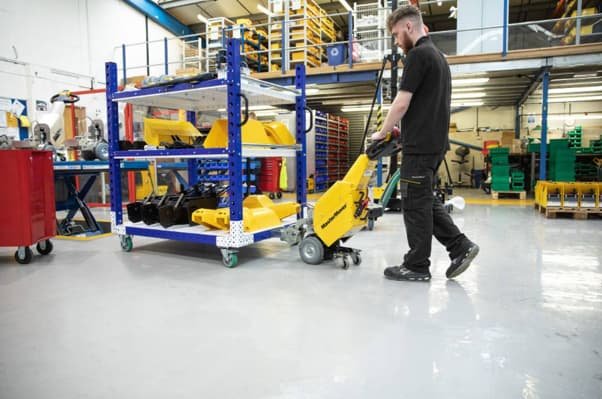
Designing, building and supplying machinery for lifting, moving, storing and transporting materials across industrial, warehousing and logistics environments is the core work carried out by handling equipment manufacturers. Their products cover a wide range, from conveyors and forklifts to cranes, hoists and automated storage systems, and all of them are engineered with one goal, to make material movement safer, faster and more efficient. To understand why this sector holds such an important place in modern supply chains, it helps to look closely at what these manufacturers actually do and how their equipment fits into different industries.
What Handling Equipment Manufacturers Actually Do
The main work of handling equipment manufacturers is creating machinery that can reduce manual labor and improve how goods flow inside a facility. This work includes designing equipment according to specific load capacities, environments and operational speeds. In many cases, manufacturers also provide custom engineering services so that standard machinery can be adapted to unique warehouse layouts or production line needs.
Some common categories of equipment that get produced are as follows:
- Conveyor systems, used for continuous material movement
- Forklifts and pallet trucks, used for load transport
- Cranes and hoists, used for vertical lifting
- Automated guided vehicles, used for repetitive transport tasks
- Storage and retrieval systems, used for warehouse organization
Each of these categories does a different job, but at the core, all of them share the same purpose, moving materials while keeping risk low and efficiency high.
Why Industries Depend on This Equipment
There is hardly any industry dealing with physical goods that does not rely on handling equipment in one way or another. In manufacturing plants, this equipment is used to move raw materials between different stages of production. In warehouses, it helps in organizing inventory and completing orders at a fast pace. At ports and logistics hubs, heavy duty cranes and container handlers keep the cargo moving without unnecessary delay.
When operations grow bigger, doing things manually becomes almost impossible, and the chances of injury or error also go up. This is exactly where engineered handling systems become necessary, since they let businesses keep their output steady while also protecting workers from heavy lifting or repetitive strain.
How Is Handling Equipment Designed for Different Materials?
Since not every material moves in the same way, the design of equipment changes depending on what needs to be handled. Fragile items, for example, need slower conveyor speeds along with padded surfaces, while bulk materials such as grain or aggregate require equipment that is built for volume and continuous flow. When it comes to heavy industrial loads like steel coils or machinery parts, reinforced lifting systems with higher weight tolerance become necessary.
Before finalizing any design, manufacturers usually look at factors such as the weight, shape and fragility of the load, along with the environmental conditions it will face. Things like temperature, moisture and dust levels also play a role, and because of this, some equipment needs corrosion resistant coatings or sealed components to work properly in harsh environments.
What Makes Modern Handling Equipment Different From Older Systems?
In older times, handling systems used to depend mostly on manual operation and simple mechanical movement. Nowadays, modern equipment is more likely to include automation, sensors and software integration as a standard part of its design. Because of this, machinery can now communicate with warehouse management systems, track inventory as it happens, and adjust its operation according to demand.
Some of the key differences can be listed as follows:
- Automated systems that lower the need for constant human supervision
- Sensor based safety features that stop the equipment whenever an obstacle is detected
- Data tracking that makes inventory records more accurate
- Energy efficient designs that help in reducing operational cost
Because of these improvements, the industry has moved away from purely mechanical solutions and shifted toward smarter, connected systems that give better visibility across the whole supply chain.
How Do Manufacturers Ensure Equipment Safety and Reliability?
Safety and reliability sit at the center of how handling equipment gets engineered. Before any equipment is put into operational use, manufacturers usually run it through strict testing procedures, which include load testing, stress analysis and durability trials. On top of this, many manufacturers also follow industry safety standards that decide design tolerances, emergency stop mechanisms and structural strength.
Along with this, regular maintenance schedules, built in diagnostic tools and clear operational guidelines also support long term reliability. Equipment that gets inspected on a consistent basis tends to last longer and faces fewer unexpected breakdowns, and this has a direct effect on productivity in industrial settings.
The Growing Role of Customization in Handling Solutions
Since no two facilities work in exactly the same way, customization has become a big part of how equipment gets manufactured today. Factors such as floor space, ceiling height, type of load and workflow pattern all influence how the equipment needs to be configured. In many cases, manufacturers work closely together with facility planners so that layouts can be designed to make the best use of available space while still keeping the material flow smooth.
Customized solutions may include things like modified conveyor lengths, special attachments for unusual load shapes, or software that gets integrated with the existing inventory system. Because of this flexibility, businesses from very different sectors, whether it is food processing or automotive manufacturing, are able to find equipment that suits their own operational needs.
To sum up, handling equipment manufacturers keep shaping how industries move, store and manage materials at every stage of production and distribution. As automation and smart technology continue to become part of daily operations, the equipment coming from these manufacturers is likely to keep changing further, bringing solutions that are safer, faster and more precise for material handling across many different industries.